
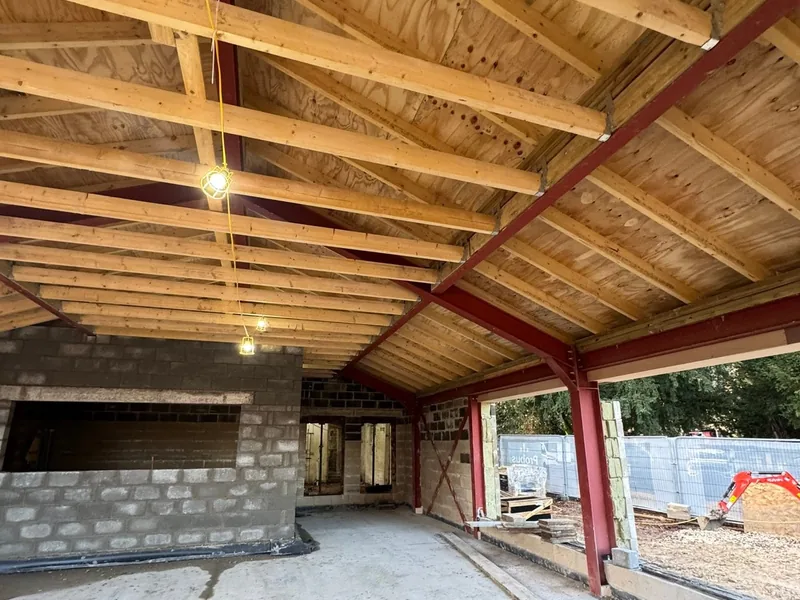
Alford Manor House
A 20 metre hand cut roof on a steel framed structure, a new slate roof, and 111 square metres of rough sawn 6x1 cladding in natural timber with a black protective coating.
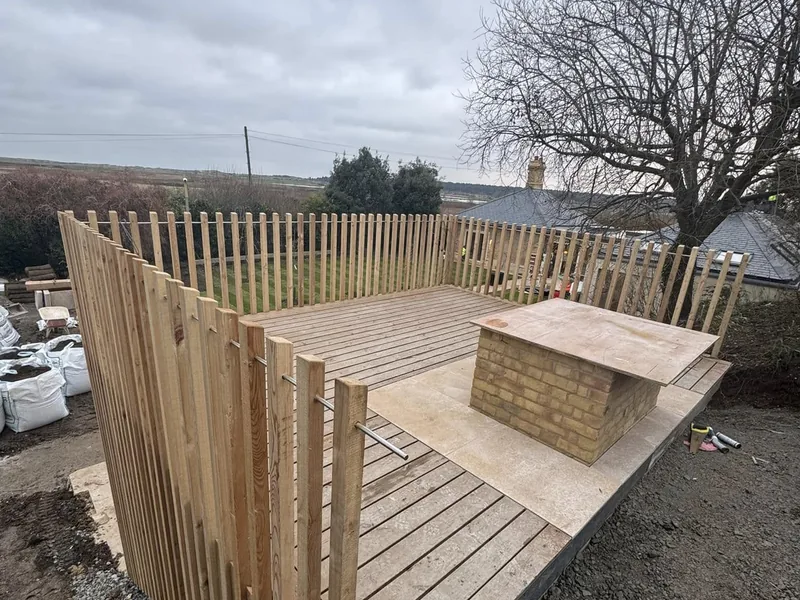
Cladding · Fakenham, north Norfolk
Cladding for Fakenham and the north Norfolk villages, from a contractor working this county from Wells-next-the-Sea and Cromer. Free site visit, and an estimate that specifies the cavity and the fixings as well as the boards.
AJB Group has not clad a building in Fakenham, and says so rather than dressing up a job in a neighbouring town as a local one. The nearest cladding work is at Wells-next-the-Sea, about ten miles north on the B1105, and at Cromer, about twenty two miles east on the A148.
What is true, and useful, is that Fakenham sits on the road between those two jobs. The A148 from King's Lynn to Cromer runs straight through the town, and the B1105 runs north from it to Wells. If AJB is on this coast, it goes through Fakenham to get there.
Exposure
The useful question for a Fakenham building is how much of the coastal specification you actually need to pay for, because there is a genuine difference between here and Wells.
Salt drops off. Airborne chlorides fall away quickly with distance from the sea, and at roughly ten miles inland Fakenham is out of the zone where A4 grade 316 stainless fixings are mandatory. On a sheltered elevation, A2 grade 304 is defensible. Two caveats: with cedar and oak, AJB still specifies A4, because the natural acids in those timbers attack ordinary and galvanised fixings regardless of salt, staining the boards with black tears under every fixing head. And on a genuinely exposed north facing elevation with a long open fetch, the extra cost of stepping up is small enough that it is usually worth doing anyway.
Wind driven rain does not. The ground between Fakenham and the coast is flat, open, agricultural and largely unwooded. There is nothing to break the wind between the North Sea and a building on the edge of the town. So the ventilated cavity, the breather membrane, the counter-battens under vertical boards and the openings at base and head all still matter, exactly as they do on the coast. Cladding is a rainscreen, not a waterproof layer, and the only thing that saves a wall is its ability to dry.
The build up stays the same. Vapour permeable breather membrane on the wall, UV stable facade grade behind any open jointed board. Treated softwood battens, counter-battened where the boards run vertically. A drained and ventilated cavity of at least 25mm, open at the base and the head, insect mesh at the openings. End grain sealed. Boards set out from the openings so they land sensibly at reveals rather than finishing on a 20mm rip in a corner.
Planning
Fakenham is materially different from Hunstanton and Burnham Market on planning, and it is worth knowing before you assume the worst.
Cladding the exterior of a house is excluded from permitted development on what the planning system calls article 2(3) land: conservation areas, National Landscapes, National Parks, the Broads and World Heritage Sites. Burnham Market is inside the Norfolk Coast National Landscape and has a conservation area over the village centre, so the exclusion bites twice. Fakenham sits outside the National Landscape. The town centre does have a conservation area, and inside it the same exclusion applies, but on an unlisted house on the edge of the town, away from the conservation area, cladding may well fall within permitted development.
That is a real practical difference, and it is the reason a Fakenham enquiry is often a shorter conversation than a coastal one. It is still worth confirming with North Norfolk District Council rather than taking a contractor's word for it, and listed building status changes everything regardless of where the building sits.
AJB has already worked for that authority. The company carried out a full rip out and upgrade of failed fire doors for North Norfolk District Council, refitted to current regulations and fire safety standards. It is not a cladding job, but it means the council has already engaged and vetted the firm in this district.
What gets clad around here
Fakenham is a market town in an agricultural landscape, and the cladding work around it reflects that. There is far more grain store, workshop, farm office, equestrian building and barn conversion here than there is seafront lodge. Cladding on those buildings is usually functional rather than decorative, and that changes what makes sense.
Rough sawn softwood or larch on a steel frame. Fixed to rails, run vertically on agricultural forms, often left to silver or given a dark coating so the building sits quietly in the landscape. This is exactly what AJB installed at Alford: 111 square metres of rough sawn 6x1 across a new events hall and workshop, in natural timber with a protective black paint coating chosen so the buildings would blend with the properties around them. The roof on that same building was a 20 metre structure hand cut onto a steel frame.
Barn conversions. Where an agricultural building becomes a dwelling, the cladding has to satisfy two masters: the design officer, who wants it to still read as a barn, and the building regulations, which want a warm, dry, ventilated wall behind it. AJB has done the carpentry side of exactly that job at King's Lynn, forming a new first floor inside a tight barn with a traditional joist set before running a complete first fix through the building.
Extensions and garden rooms. The domestic end of it. Larch or cedar on a modern rear extension, composite or thermally modified timber where the owner does not want a maintenance cycle, shiplap where a simple lapped profile suits the building better than a contemporary flush board.
Getting to you
Fakenham is about 55 miles from AJB's base at Spalding: the A17 to King's Lynn, then roughly 22 miles east on the A148. From the town, Wells-next-the-Sea is about 10 miles north on the B1105 and Cromer about 22 miles east on the A148, which puts Fakenham directly between the two places on this coast where AJB has actually worked.
Elsewhere in Norfolk the company has replaced the roof on Stoke Ferry Village Hall with a new trussed roof, completed a barn conversion and an apartment scheme at King's Lynn, and built bespoke architectural roofs on the Norfolk coast for Grocott & Murfit. Norfolk is worked territory.
The nearest evidence
A 20 metre hand cut roof on a steel framed structure, a new slate roof, and 111 square metres of rough sawn 6x1 cladding in natural timber with a black protective coating.
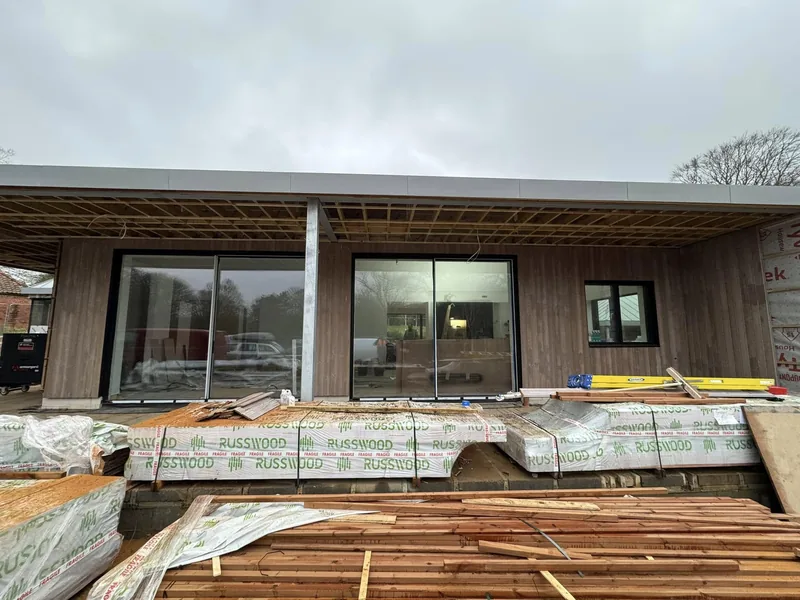
Twenty two miles east on the A148. Over 350 square metres of Scottish larch on a new build, on the most exposed part of this coastline.
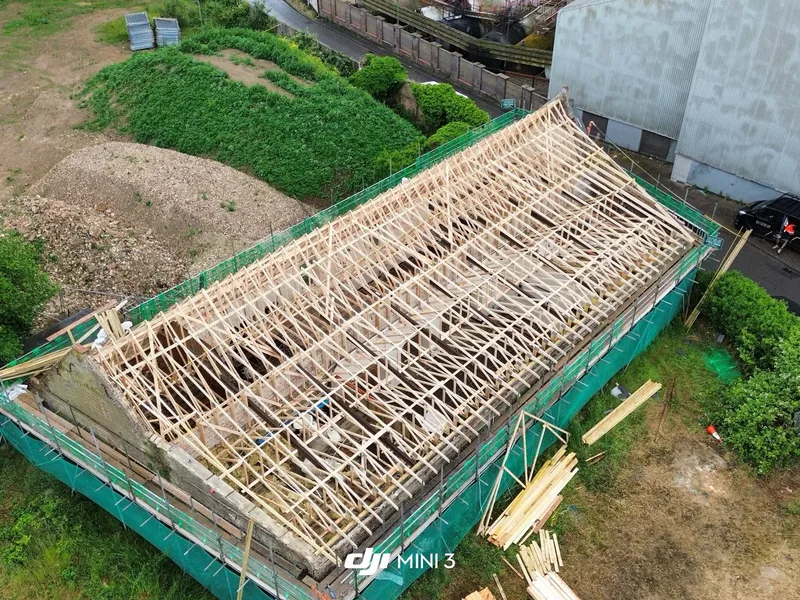
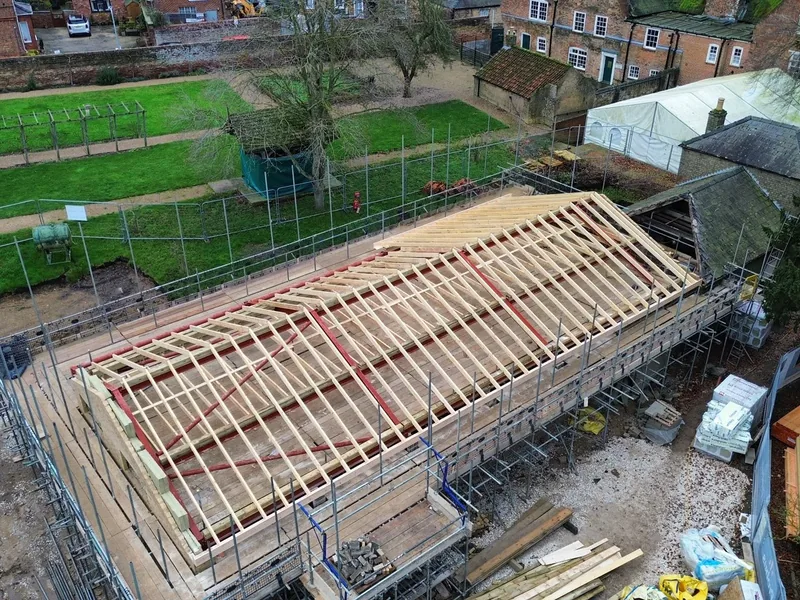
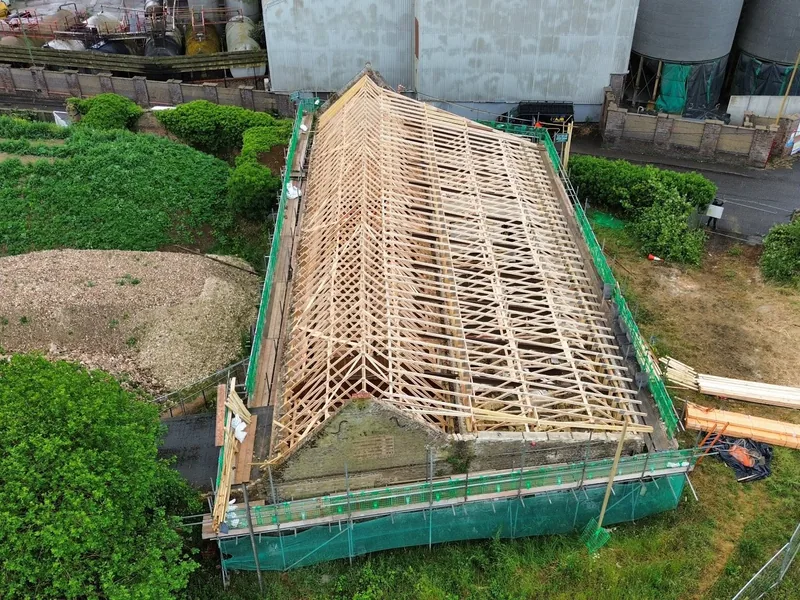
A full strip back and replacement of the roof on a Norfolk village hall, finished with a brand new trussed roof around the hall's own diary.
Common questions
No. We have no completed job in Fakenham. The nearest cladding work is at Wells-next-the-Sea, about 10 miles north on the B1105, and at Cromer, about 22 miles east along the A148. Fakenham sits on the road between our two Norfolk coast jobs.
Partly. Ten miles inland drops the airborne salt loading a long way, so A2 grade 304 stainless fixings become defensible on a sheltered elevation where A4 grade 316 would be mandatory at Wells. What does not change is the exposure to wind driven rain: the ground between Fakenham and the coast is flat, open and largely unwooded, so north and north easterly weather arrives with very little to slow it down.
It depends where in the town you are. Unlike the coastal villages, Fakenham sits outside the Norfolk Coast National Landscape, so on an unlisted house away from the conservation area cladding may fall within permitted development. The town centre has a conservation area, and on that land cladding a dwelling is excluded. North Norfolk District Council is the planning authority, so check rather than assume.
Yes, and there is direct evidence for it. At Alford we hand cut a 20 metre roof on a steel framed structure and then installed 111 square metres of rough sawn 6x1 cladding across a new events hall and workshop, in natural timber with a protective black paint coating. Grain stores, workshops, farm offices, equestrian buildings and barn conversions are all in scope.
Yes. We carried out a full rip out and upgrade of failed fire doors for North Norfolk District Council, refitted to current regulations and fire safety standards. That is the same district Fakenham sits in, so the council has already engaged and vetted us here.
About 55 miles from Spalding, out on the A17 to King's Lynn then east along the A148, which is roughly 22 miles. Cladding is package work with a defined start and finish, so it is priced with the travel in it and programmed properly rather than fitted in around local jobs.
Free site visit, and an estimate that specifies what goes behind the boards.