
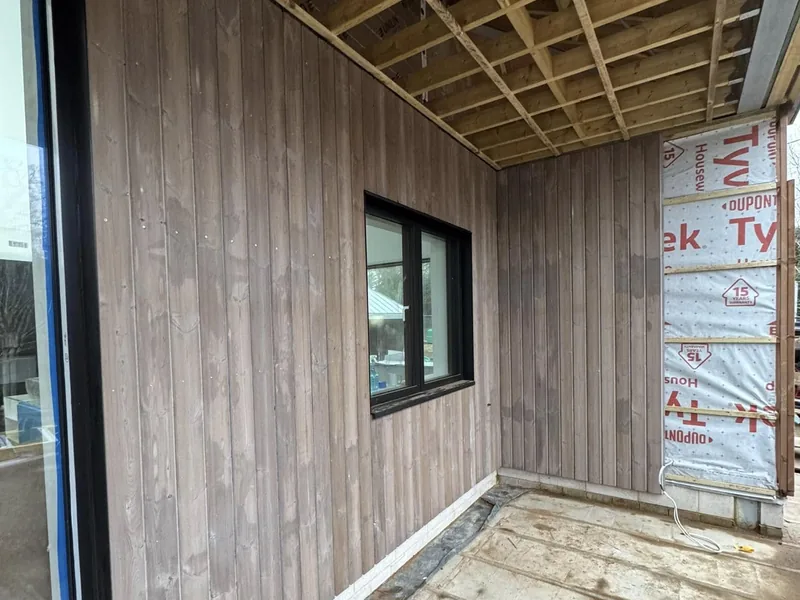
Timber cladding
The whole family: species selection, durability classes, movement, coating decisions and the build-up that makes any of them last.
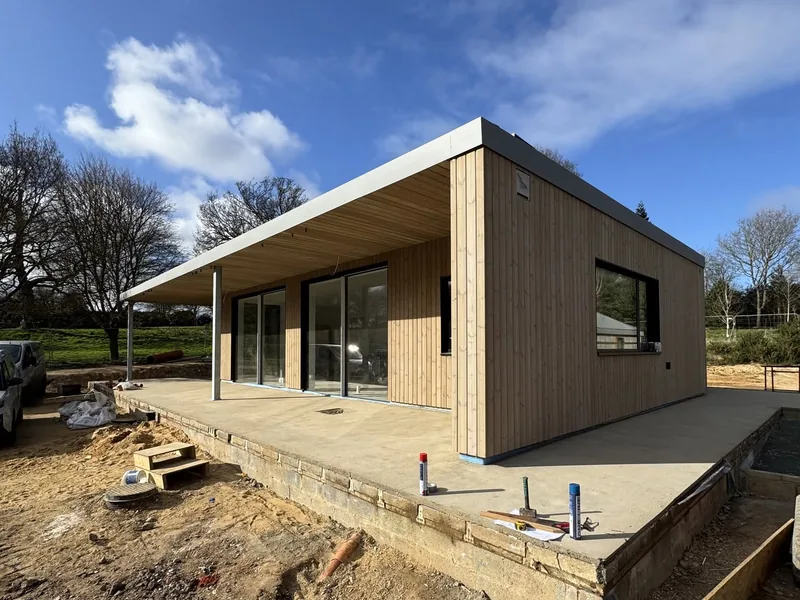
Cladding · Lincolnshire, Cambridgeshire, Norfolk
External cladding installed across Lincolnshire, Cambridgeshire and the Norfolk coast, on houses, extensions, new builds, workshops and commercial units. Timber, cedar, larch, composite, shiplap and uPVC, always on treated battens over a ventilated cavity, never straight onto the wall. Free site visit and a written estimate.
What actually decides how long it lasts
Boards are the part everybody looks at, and the part that matters least to the life of the job. Cladding is not a waterproof layer. Water will get behind it, driven through joints by wind or drawn in by capillary action at the laps. Whether that matters depends entirely on whether the wall behind can dry.
So the build-up goes: a vapour permeable breather membrane on the wall, treated softwood battens over it, and a drained and ventilated cavity of at least around 25mm that is open at the bottom and at the top, with insect mesh at the openings. Vertical boards need horizontal battens plus counter-battens, otherwise the horizontal batten dams the cavity and holds water against the membrane. Where the cladding is open jointed, the membrane behind has to be a UV stable facade grade, not an ordinary house wrap that will chalk and fail in daylight.
Then the boards go on. Face fixed or secret fixed, on a plan set out from the openings so the boards land sensibly at reveals rather than finishing on a 20mm rip at the corner. End grain sealed. Fixings stainless. Ventilation gaps left at the head and cill of every opening.
Get that right and the boards are the easy part. Get it wrong and no species of timber will save the job.
Stainless steel, A2 grade 304 as a minimum inland and A4 grade 316 on exposed coastal elevations. Cedar and oak contain natural acids that attack ordinary and galvanised fixings, which corrode, stain the timber with black tear marks under every fixing head, and eventually lose their grip. Fixings need to penetrate the batten by at least about two and a half times the board thickness. Boards up to about 100mm face width take a single central fixing per batten, wider boards take two, positioned to allow the board to move rather than to restrain it.
Materials we install
There is no best cladding, only the right one for that elevation, that exposure and that budget. Each page below sets out durability, movement, fixing method and what maintenance you are actually signing up for.
The whole family: species selection, durability classes, movement, coating decisions and the build-up that makes any of them last.
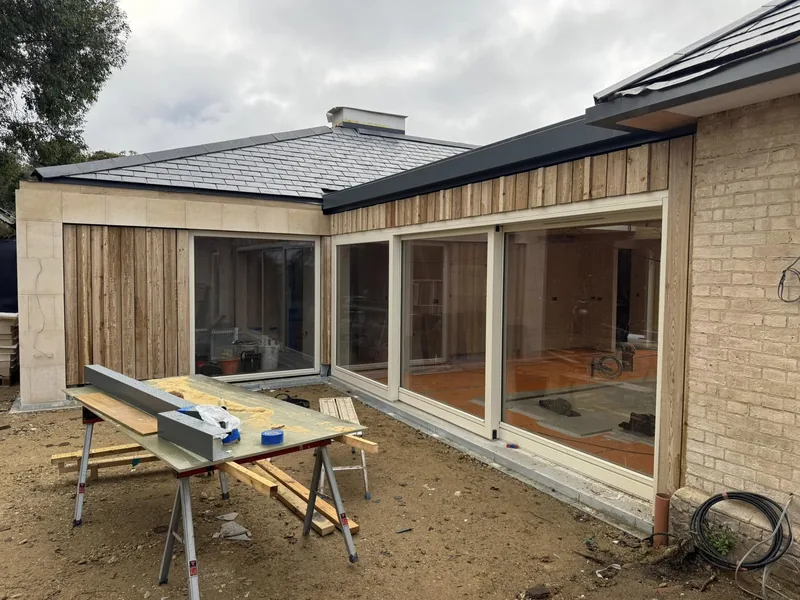
Western red cedar. Durable heartwood, very stable, light for its size, and the timber we have clad Costa units and garden structures in.
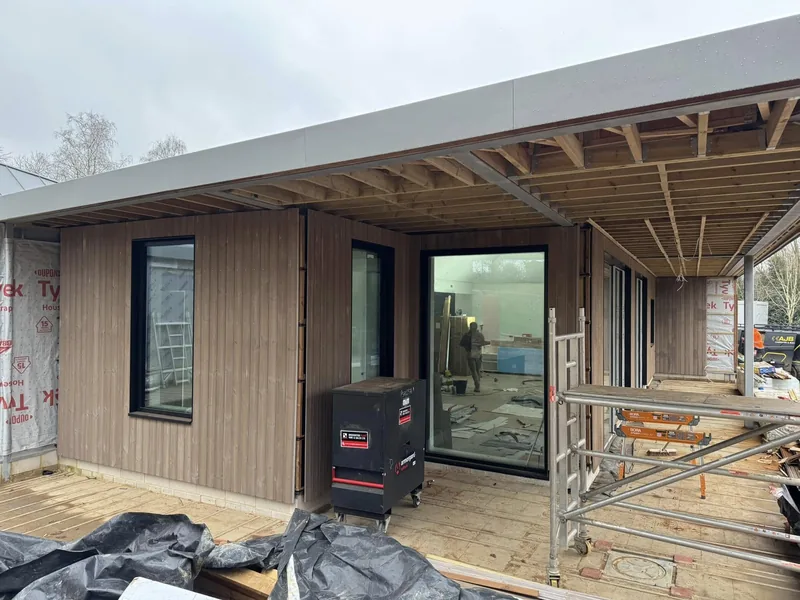
Siberian and Scottish larch. Dense, moderately durable, more character and more movement. Over 350 square metres of it on the Norfolk coast at Cromer.
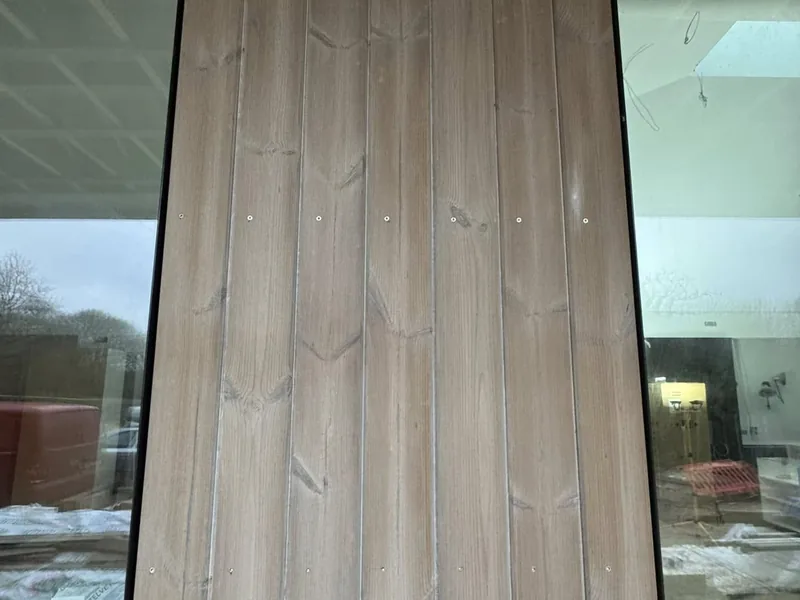
Wood plastic composite boards. Very low maintenance, consistent colour, but unforgiving about expansion gaps and fixing method.
The profile rather than the species. A rebated lap that sheds water and lets boards move, in timber or plastic, horizontal or vertical.
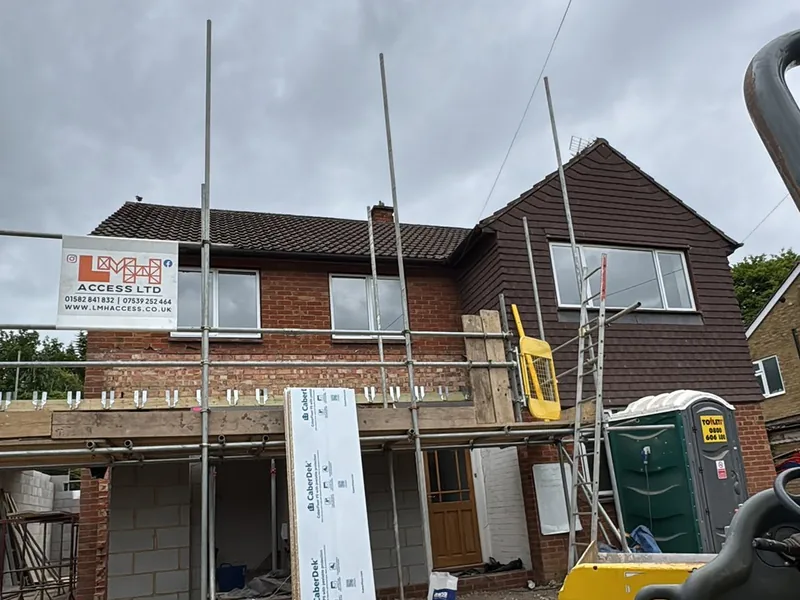
Hollow uPVC shiplap and board. Cheapest to own, needs almost no maintenance, and demands proper allowance for thermal movement.
Cladding we have actually installed
Every job listed here is ours, and every photograph on this site was taken on one of our sites. No stock imagery anywhere.
Over 350 square metres of Scottish larch on the Norfolk coastline, on a new build where the exposure is about as hard as it gets in this part of the country: salt, wind off the North Sea and full sun on the seaward elevations.
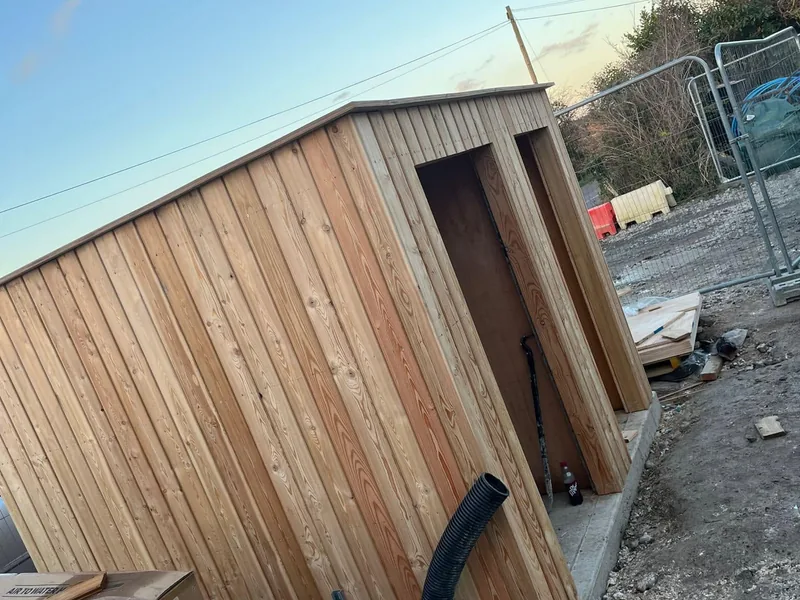
The exterior finish package on a build of circa £1.8M: full exterior cladding to both properties, plus a sea-view watch tower machined up on site by our joiners from packs of loose sawn Scottish larch, lined internally with PIR board, battened out and finished in oak faced cladding so it can be used all year.
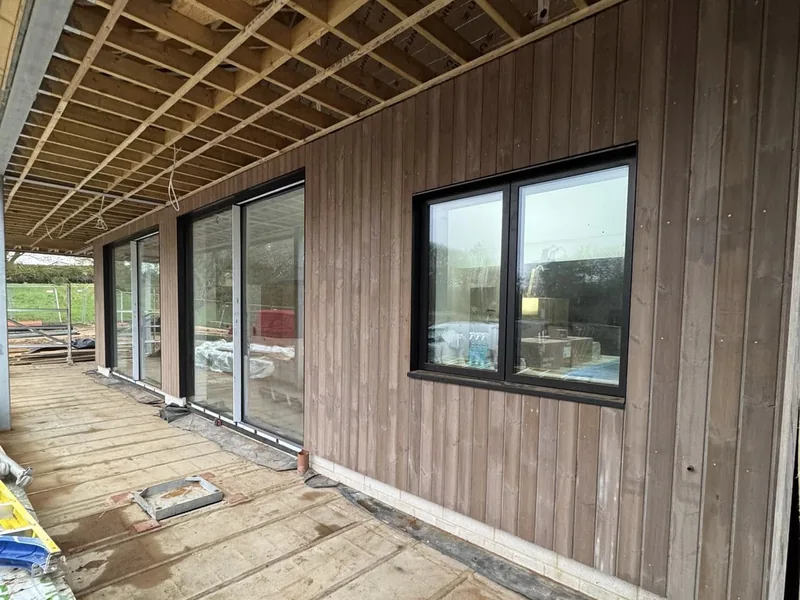
111 square metres of rough sawn 6x1 cladding across a new events hall and workshop for Probus Construction, installed in natural timber with a protective black paint coating so the buildings sit quietly against the surrounding properties.
We were entrusted to clad the exterior of a new Costa and KFC retail park unit in Costa's 2022 national design, including British red cedar to the drive thru section. Fiddly work on a national brand's rollout specification, with a fixed opening date behind it.
Cement board cladding to a domestic extension, in what turned out to be a very popular colour locally. Fibre cement is the board most often specified where a timber look is wanted but combustibility rules it out.
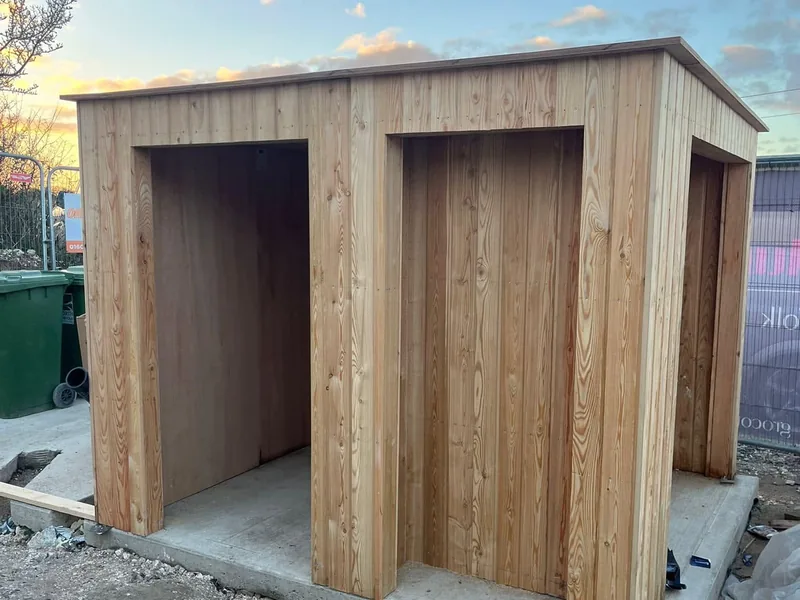
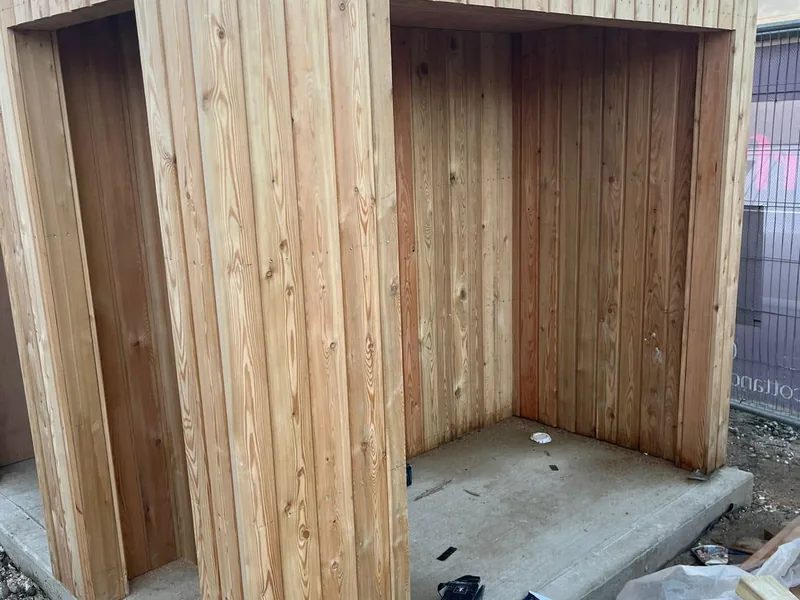
Exterior cladding on a high end bespoke bungalow renovation in Norfolk worked to the architect's designs. A timber frame front and rear extension wrapped in cedar. A garden fire pit structure cloaked in western red cedar for SSL Home Creations, alongside a 50 metre run of hit and miss batten fencing.
Between Cromer, Wells-next-the-Sea, Hunstanton and the north Norfolk villages, three things change at once. Salt-laden air attacks fixings and coatings far faster than inland air. Driving rain arrives at pressure, so joints, laps and reveal details take punishment that a sheltered Lincolnshire elevation never sees. And UV on an open seaward aspect greys and degrades coatings quicker.
What we change for a coastal job: A4 grade 316 stainless fixings as standard rather than A2, generous cavity ventilation, all end grain sealed before fixing, coating applied to all four faces before the boards go up rather than brushed on afterwards, and a preference for a design that accepts silvering rather than one that depends on a coating staying perfect.
It also changes the maintenance conversation. An honest expectation on an exposed seaward elevation is an annual wash down and inspection, and recoating a translucent oil noticeably sooner than the same product would need inland.
Since the 2018 amendment to the Building Regulations, combustible materials have been restricted in the external walls of relevant buildings above a height threshold. That threshold was lowered to 11 metres in England in 2022, and the categories now include dwellings, care homes, hospitals, student accommodation, hotels, hostels and boarding houses. Above it, external wall materials generally have to meet the non-combustible classification.
In practice that rules timber off the external walls of most apartment blocks over roughly three or four storeys, which is why fibre cement board, aluminium and mineral-cored panel systems dominate that market. Houses, commercial units, industrial buildings, workshops and lower-rise work are usually unaffected.
This is a designer and building control decision, not a carpenter's, and we will not tell you your building is compliant. What we will do is fit what the specification says, flag it if a specification looks like it conflicts with the height rule, and fit fibre cement board where that is the answer, as we did at Long Sutton.
Send elevations and a specification and we will price the cladding package, membrane and battens included, or take it as part of a wider carpentry package. We are CHAS accredited and SMSTS certified, issue RAMS before we start, and have fourteen full-time carpenters, so several elevations or plots can run at once. We have worked to national brand rollout specifications, to architect's designs, and to council-overseen programmes at Alford for East Lindsey District Council and Probus Construction.
One point of contact, a free site visit and a written estimate before anything starts. We will tell you honestly what a material will look like in five years, which is usually the conversation that matters most, and we will say when a cheaper board would do the same job on a sheltered elevation. If the cladding is part of an extension or renovation, our own trades cover the rest of it, so you are not chasing four companies.
Common questions
If maintenance is the priority, uPVC and good capped composite need the least attention, essentially washing down. Among timbers, western red cedar heartwood is classed as durable and is the most stable, and larch is moderately durable. Any untreated timber left uncoated will silver and needs almost no maintenance beyond checking fixings, but you have to accept the colour change. The real answer depends on the elevation, the exposure and what you want it to look like in ten years.
Yes. Cladding is a rainscreen, not a waterproof layer. It needs a breather membrane on the wall behind, treated battens to hold the boards off it, and a ventilated and drained cavity of at least around 25mm that is open at the bottom and top so air moves and any water that gets past the boards can drain and dry. Vertical boards need counter-battens so the cavity is not blocked. Fixing boards straight onto blockwork or straight onto a membrane traps moisture, and it is the most common cause of premature failure.
A4 grade 316 stainless steel. Ordinary and galvanised fixings corrode in salt-laden air and stain the timber, and cedar and oak make it worse because their natural acids attack the coating. Inland, A2 grade 304 stainless is normally sufficient, but on exposed coastal elevations at somewhere like Cromer or Wells-next-the-Sea, A4 is the sensible specification and the price difference is trivial against the cost of taking an elevation back off.
All untreated timber silvers under UV, and it happens unevenly, faster on the south and west elevations and slower where a soffit or a projection shelters the boards. You can either accept the silvering as the design, which is what most architects specify, or apply a UV stable pigmented oil or coating and commit to recoating it, typically every two to three years for a translucent oil. What does not work outside is clear varnish.
Not on the external walls of relevant buildings above the height threshold in the Building Regulations, which in England now sits at 11 metres and covers dwellings, care homes, hospitals, student accommodation, hotels, hostels and boarding houses. Above that threshold external wall materials generally have to meet the non-combustible classification. Below it, and on houses, commercial and industrial buildings, timber is normally fine. Check the requirement with your designer or building control before specifying, because it is the client's designer who owns that decision.
Yes. We have clad whole houses, new build bungalows, extensions, events halls, workshops, retail units, garden structures and a sea-view watch tower. Work ranges from a single elevation on a domestic extension up to over 350 square metres of Scottish larch on the Norfolk coastline at Cromer.
We will price the cladding package including membrane, battens and fixings, and tell you honestly how it will weather.