
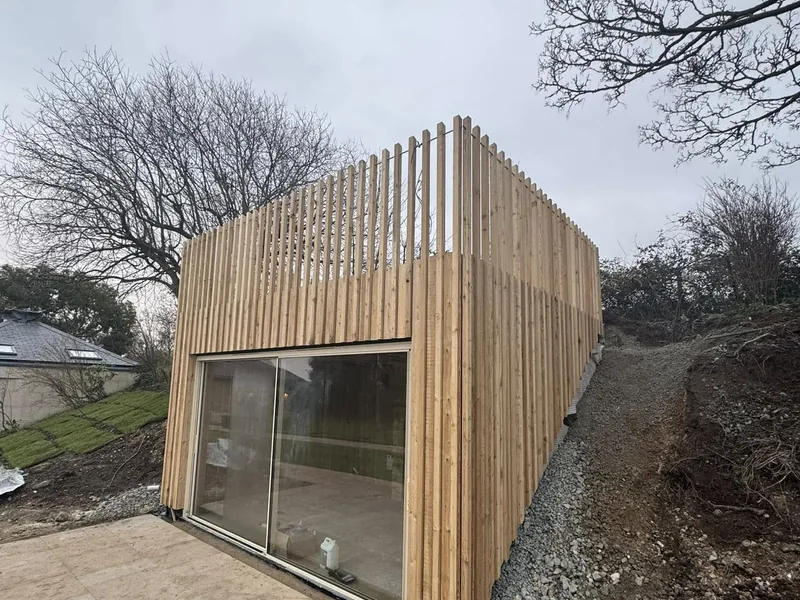
Snuggle Cottage, Wells-next-the-Sea
The exterior finish package on a circa £1.8M coastal build, including a Scottish larch watch tower machined up on site from loose sawn packs.
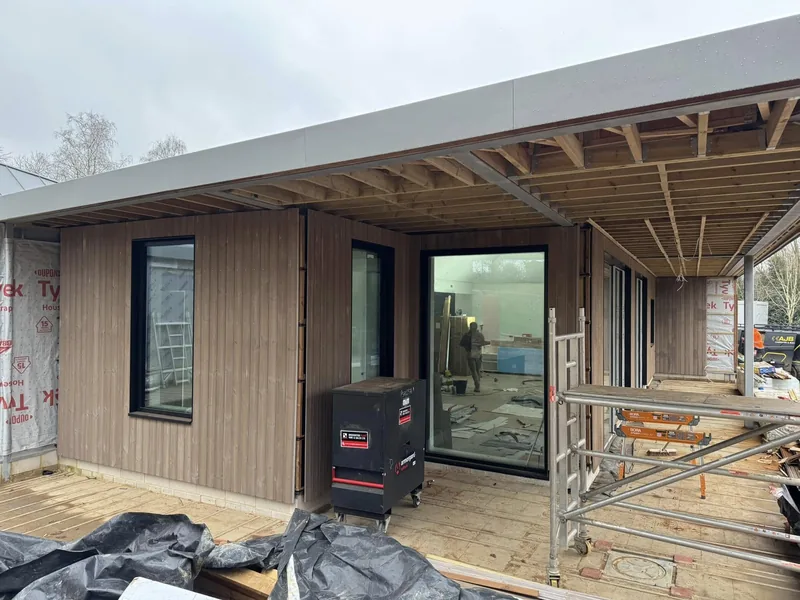
Cromer, Norfolk
Timber cladding on the Norfolk coastline at Cromer, contracted to fit over 350 square metres of Scottish larch. Clean lines, a contemporary finish and a material that will weather into the coast rather than against it.
The brief
Cromer sits on the exposed north Norfolk coast, and this project put a large timber elevation directly into that weather. AJB Group was contracted to fit over 350 square metres of Scottish larch cladding on the property, transforming it with a material chosen to look good and to protect against the elements.
The design intent was modern: clean lines and a contemporary finish, creating a striking visual against the coastline. The client also wanted a sustainable material, which is one of the reasons larch was specified over a manufactured board.
Norfolk is a favourite patch for the company. It is one of AJB Group's three core counties alongside Lincolnshire and Cambridgeshire, and the north coast in particular keeps coming back around: the same team had recently machined and built a Scottish larch watch tower at Wells-next-the-Sea, along the same stretch of coast.
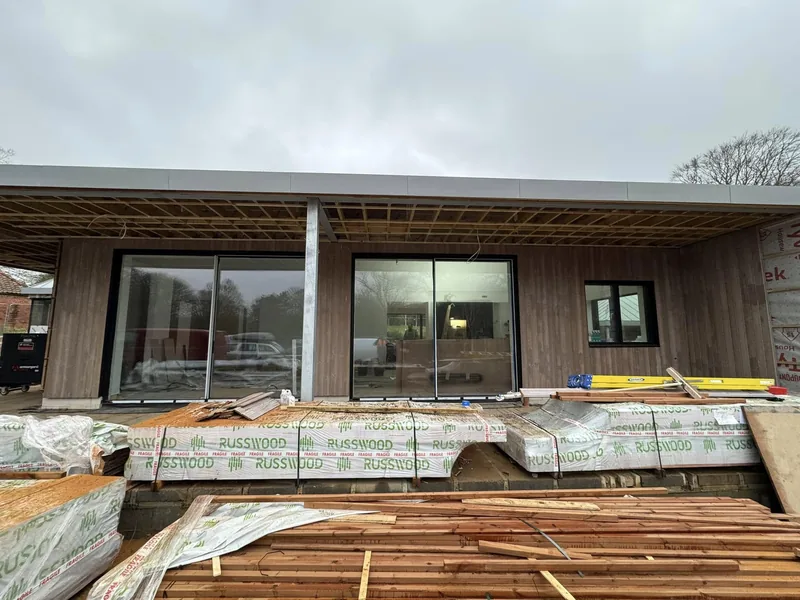
The install ran to more than 350 square metres of Scottish larch cladding across the property. At that area, cladding stops being a finishing trade and becomes a package in its own right: the boards have to be ordered, delivered, stacked and acclimatised on site, and the setting out has to be planned across whole elevations rather than worked out wall by wall as you go.
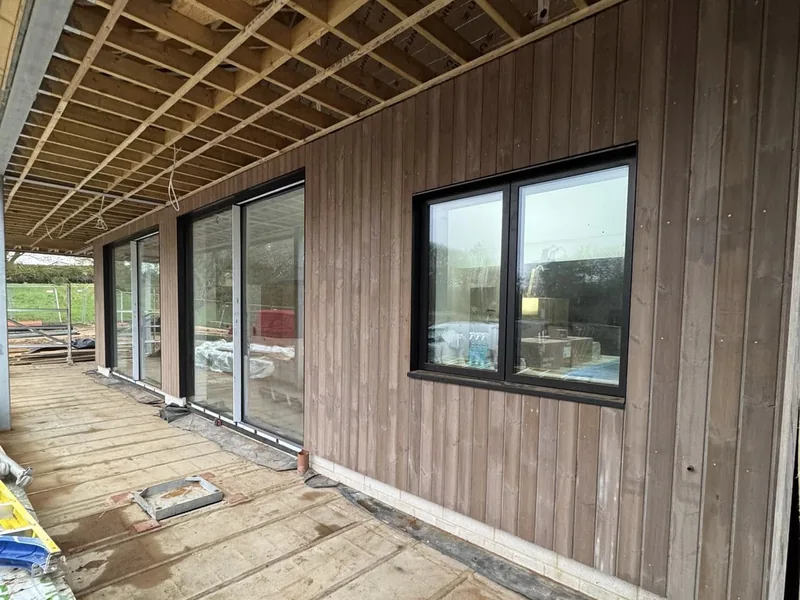
Larch is a sensible specification for an exposed marine elevation. It is naturally durable, so it does not depend on a chemical preservative treatment to survive, and it holds its shape reasonably well in the wet and dry cycling that a coastal wall goes through. Left alone it silvers as it weathers, which on the Norfolk coast means it moves towards the same greys as the sea, the flint and the sky rather than sitting against them.
It is also a material that suits a client asking for sustainability. Larch is grown and sawn in the UK, including Scotland, so it does not carry the transport burden of an imported hardwood or the manufacturing burden of a composite board.
Larch is one of six cladding materials AJB Group installs, alongside timber, cedar, composite, shiplap and uPVC. The company has fitted rough sawn 6x1 timber cladding with a protective black coating across an events hall and workshop at Alford in Lincolnshire, cement board cladding on a domestic extension at Long Sutton, and an oak faced internal lining over PIR boards in the Wells watch tower. Different materials, same trade: getting a weather line right on a building that has to last.
Elevations, a material and a target finish is usually enough to get a real number back. If the material is not yet decided, tell us the exposure and the look you are after and we will put a specification against it. Larch, cedar and composite all behave differently on a coastal wall, and choosing on appearance alone is how people end up recoating a house four years early.
On site
The result
More than 350 square metres of Scottish larch, fitted on an exposed coastal property, giving the clean lines and contemporary finish the design called for. The visual impact is immediate. The more useful outcome is slower: a naturally durable timber elevation that will silver down over the coming years into the palette of the Norfolk coast, without needing to be stripped and recoated to stay looking right.
For AJB Group the project sits alongside Wells-next-the-Sea as proof that the company handles larch at volume as well as one off. One is 350 square metres across a house, the other is a bespoke tower machined up from loose sawn packs. Both take the same understanding of how the timber behaves once it is on the wall.
If you have a coastal elevation to clad, in Norfolk or anywhere in the three counties, send the drawings and we will price the package.
Common questions
Over 350 square metres of Scottish larch cladding, fitted by our carpenters on a property on the Norfolk coastline at Cromer.
Larch is naturally durable, holds its shape well in exposed conditions and can be used without a chemical preservative treatment. Left to weather it silvers down over time, which suits a coastal setting. It is also readily available from UK and Scottish sources, so it is a sensible choice where a client wants a sustainable material.
Timber, cedar, larch, composite, shiplap and uPVC. Recent projects have included 350 square metres of Scottish larch here at Cromer, a larch watch tower at Wells-next-the-Sea, 111 square metres of rough sawn 6x1 cladding at Alford in Lincolnshire, and cement board cladding on a domestic extension at Long Sutton. See all cladding services.
Yes. Norfolk is one of our three core counties alongside Lincolnshire and Cambridgeshire, and the north Norfolk coast in particular is a favourite patch. We have worked at Cromer, Wells-next-the-Sea and King's Lynn.
Related project
The exterior finish package on a circa £1.8M coastal build, including a Scottish larch watch tower machined up on site from loose sawn packs.
Larch, cedar, composite, shiplap or uPVC. Send the elevations and we will price the cladding package.