
For people starting out
Carpentry apprenticeships and getting started on site
If you want to be a carpenter and you are trying to work out how the qualifications, the cards and the first job fit together, this page lays it out. No sales pitch, just how it actually works.
Carpentry is one of the few trades where a good year one apprentice becomes genuinely useful very quickly, and where a bad one is obvious inside a fortnight. The difference is rarely talent. It is turning up, listening, and being willing to do the unglamorous parts properly.
What an apprenticeship actually is
An apprenticeship is a job with training attached. You are employed, you are paid, and part of your time is spent on formal learning, usually at a college or with a training provider, either on day release or in blocks. You are not a student who visits a site occasionally. You are a member of the team who also goes to college.
The main starting point in England is the Level 2 carpentry and joinery apprenticeship, which normally takes around two years. From there, the Level 3 advanced route takes you into more complex work and typically adds another year or two. Apprenticeship wages have their own minimum rate that changes each April, and most employers pay above it once you are useful, so ask about the rate directly rather than guessing from what somebody told you in the pub.
Because the detail of funding, entry requirements and standards changes fairly regularly, check the current position on GOV.UK and with the colleges near you before making decisions off the back of anything you read online, including this page.
Site carpentry or bench joinery: choose deliberately
Most carpentry qualifications split into two routes and it is worth understanding the difference before you pick.
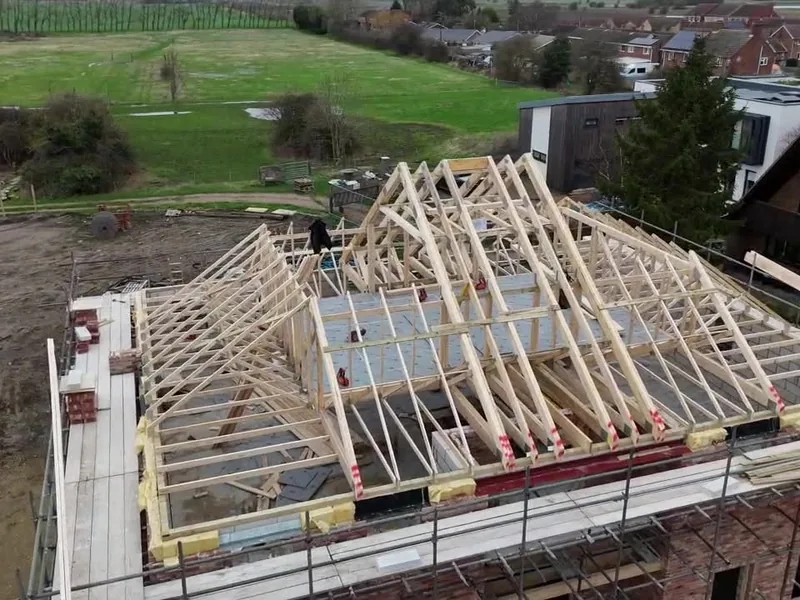
Site carpentry is work carried out on the building itself: floor and roof structures, stud partitions, joists, roof trusses and cut roofs, first fix, then second fix work like doors, ironmongery, skirting, architrave, staircases and fitted units. You work outside a lot, on scaffold, in whatever the weather is doing, and you work to a programme alongside other trades.
Bench joinery is made in a workshop and installed later: staircases, windows, doors, bespoke cabinetry and one-off pieces. Warmer, drier, tighter tolerances, more machinery, more setting out from a rod or a drawing. Slower and more precise by nature.
Neither is the senior version of the other. They are different skills and they pay differently in different markets. You can move between them later, plenty do, but the first few years shape which one you are quick at. If you have the chance to spend a day watching each, take it.
Cards, and why site access matters
You do not legally need a qualification to call yourself a carpenter, and a good domestic carpenter can build a career without one. But most commercial sites will not let you through the gate without a valid CSCS card, and the card you can hold is tied to the qualification you have. Apprentices have their own card category while they train, and the Level 2 NVQ or equivalent is what unlocks the skilled worker card.
That single fact decides how wide your options are. Without site access you are limited to domestic work. With it, developments, commercial fit-outs, public sector projects and the bigger contractors all open up, and that is where the steady, repeating work tends to be. Card schemes and requirements change, so check the current rules with CITB or CSCS rather than relying on what your mate had five years ago.
What the first year is really like
Early starts. Cold hands between October and March. A lot of carrying, sweeping, keeping the area clear and fetching materials, particularly at the beginning, because that is how you learn where everything goes and how a job is sequenced.
You will spend more time than you expect on measuring, marking out and checking. You will make mistakes and be told about them, usually bluntly, and that is not personal, it is a trade where a wrong cut costs money and a wrong roof member is dangerous. The carpenters who progress fastest are the ones who ask before cutting rather than after.
You will also be surprised how quickly things click. Hang enough doors and you stop thinking about it. Set out enough joists and the maths becomes automatic. By the end of a decent first year you should be able to work on your own on a defined task, and that is the point at which you stop being a cost and start being useful.
Getting taken on with no experience
Applying online alone rarely works in this trade. What does work:
- Approach real firms directly. Local carpentry contractors and builders take people on outside formal recruitment far more often than they advertise. A short message saying who you are, where you live, what you have done and that you will start on the bottom rung goes a long way.
- Get on site any way you can. Labouring or working as a carpenter's mate alongside experienced carpenters is a legitimate route in, and a lot of good carpenters started that way, picking up the qualification later through an on-site assessment route.
- Show something. Photos of anything you have built, even at home or at college, are worth more than a CV with no experience on it. Take pictures of your work from day one and keep them.
- Sort your transport. Sites are rarely on a bus route and start times are early. Being able to get yourself there reliably is often the single biggest thing separating two candidates.
- Be persistent without being a pest. Ask again in a month. Workloads change, and the person who checked back is the one who gets the call when a project lands.
What contractors are actually judging
Skills can be taught, and any decent firm expects to teach them. What cannot be taught easily is turning up on time every day, in the right gear, with a phone that is answered, and a willingness to do a boring task properly because it needs doing. Safety awareness matters too: a trainee who wears the PPE without being nagged and stops to think before climbing something is a trainee people want to keep.
The other thing that gets noticed is honesty. Say when you have not done something before. Nobody minds teaching you. Everyone minds finding out at four o'clock that a whole run has been set out wrong because you did not want to look daft asking at eight.
Where AJB Group stands
AJB Group is a carpentry contractor in Spalding with fourteen full-time carpenters, working across Lincolnshire, Cambridgeshire and Norfolk on everything from domestic refurbishments to 300-home developments, hospital work and public buildings. That mix is a good place to learn, because you see far more in a year than you would on a single site.
Whether there is a place for somebody starting out depends on the workload at the time. AJB has taken on carpenters' mates to work alongside experienced carpenters, including on a castle project in Kent with accommodation covered, and has advertised bench joiner work where training was given to someone still learning. If that is you, get in touch through the carpentry jobs page and say exactly where you are up to.
Once you are established, the next decision is usually whether to stay employed or go out on your own, and the self-employed or employed guide goes through that properly. For a sense of the week to week, read what it is like working for a carpentry contractor.
Common questions
Carpentry apprenticeships
How long does a carpentry apprenticeship take?
A Level 2 carpentry and joinery apprenticeship usually runs for around two years, with time on site and time at college. Going on to the Level 3 advanced qualification typically adds another year or two. Length varies with the provider, how much prior experience you have and how quickly you gather your on-site evidence.
What is the difference between site carpentry and bench joinery?
Site carpentry is the work done on the building: floors, roofs, stud partitions, doors, staircases, trim and fitted units. Bench joinery is made in a workshop and taken to site, such as stairs, windows, doors and one-off cabinetry. Most apprenticeships ask you to pick one route, and you can move between them later, but the tools, tolerances and working conditions are different enough that it is worth choosing deliberately.
Do I need a qualification to work as a carpenter?
Not by law, but in practice yes for site work. Most commercial sites require a valid CSCS card to get through the gate, and the card you can hold depends on the qualification you have. A Level 2 NVQ or equivalent is what unlocks the skilled worker card, and without site access your options narrow to domestic work only.
Can I get into carpentry without an apprenticeship?
Yes. Plenty of good carpenters started as a labourer or a carpenter's mate, learned on site, and picked up the qualification afterwards through an on-site assessment route. It is slower and it depends entirely on finding someone willing to teach you, but it happens all the time and a lot of contractors respect it.
What do contractors actually look for in an apprentice?
Turning up, on time, every day, in the right gear, with a willingness to sweep up without being asked twice. Skills can be taught and will be. Reliability, attitude and safety awareness cannot, and they are what decides whether somebody keeps you on after the first month.
Does AJB Group take on apprentices?
It depends on the workload at the time. AJB has taken on carpenters' mates working alongside experienced carpenters, and has advertised bench joiner work where training was given to somebody still learning the trade. If you are starting out, get in touch and say exactly where you are up to rather than assuming the answer is no.
Starting out and want to get on site?
Tell us where you are up to and we will give you a straight answer.